

Can Riverlane’s Deltaflow unlock useful quantum computing?, read on Quantum Zeitgeist
Is Riverlane’s Deltaflow the key to useful quantum computing?
Image © Quantum Zeitgeist
649 Quantum Zeitgeist articles from 5 Jul 2019 to 9 Oct 2026, 172 of them tagged UK. NQCC appears in the most (42).
A project filter includes articles naming the project or its lead or partners. Themes come from linked projects and organisations' specialisms.
Latest 48 of 649 articles
Is Riverlane’s Deltaflow the key to useful quantum computing?
Image © Quantum Zeitgeist

A new study shows Quantinuum’s Helios system achieved ~13x lower hardware error rates in tests critical for quantum error correction, and its flexible architecture supports more error-correcting code families.
Image © Quantum Zeitgeist

Arqit Quantum Inc. announces select preliminary financial results for the second half and full fiscal year 2026, expecting revenue of approximately $355,000 to $380,000 for the second half period ended 30 September 2026. For the full fiscal year ended 30 September 2026, revenue is expected to be $97
Image © Quantum Zeitgeist
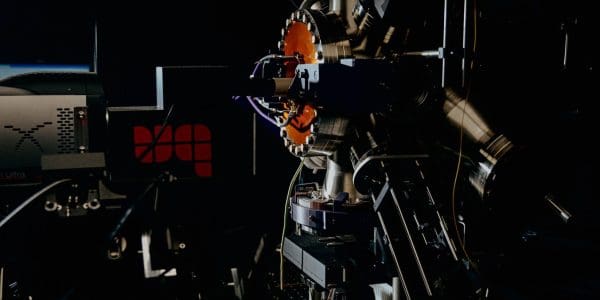
Universal Quantum, a UK-based firm, just raised over $100 million in Series A funding, the largest of its kind for a British quantum company.
Image © Quantum Zeitgeist
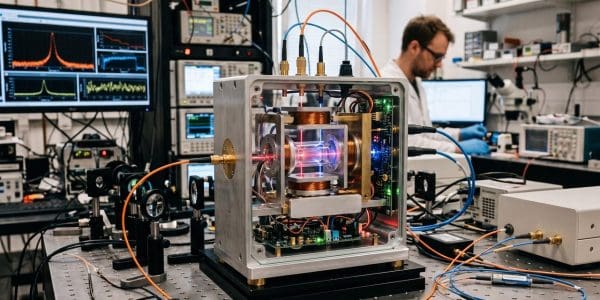
Q-BIOMED Connect 2026 united quantum researchers, clinicians & industry to discuss translating technologies into clinical impact.
Image © Quantum Zeitgeist

Could a quantum computer accurately predict the complex signature of a molecule previously beyond its reach? Now, using Quantinuum’s System Model H2 trapped-ion processor, scientists have simulated the liquid-state proton NMR spectrum of 1,2-di-tert-butyl-diphosphane at a two-qubit gate depth of 144
Image © Quantum Zeitgeist

Efficient quantum state preparation on Quantinuum hardware Validating complex quantum states typically demands millions of measurements, hindering progress towards useful computation. Now, by implementing a pre-measurement basis change, scientists have compressed that process down to only one thousa
Image © Quantum Zeitgeist

Nu Quantum proposes a new scaling path for quantum computers, mirroring how classical and AI systems connect processors.
Image © Quantum Zeitgeist

Optalysys argues that modern AI’s scaling is limited by data movement, not just processing power.
Image © Quantum Zeitgeist

Quantinuum trained 30 participants—including those from computational chemistry—in a five-day InQuanto Summer School, bridging expertise in quantum computing and chemical modeling.
Image © Quantum Zeitgeist

The Quantum Software Lab (QSL) at the University of Edinburgh has become a globally recognized hub for creating software solutions, and with its strategic partnership with the UK’s National Quantum Computing Centre (NQCC), now has more than 70 researchers. In three years, the QSL is poised to lead a
Image © Quantum Zeitgeist

The University of Western Australia (UWA) and Quantinuum signed an MOU, expanding access to Quantinuum’s Helios quantum computer.
Image © Quantum Zeitgeist

Error handling ran through much of this week’s news. Pasqal won French backing to lead a fault-tolerance programme, D-Wave opened a simulator for testing error-aware code, and Classiq released a tool that estimates the physical-qubit cost of fault-tolerant programs. IBM and Harvard showed they could
Image © Quantum Zeitgeist

Quantum Fringe Festival 2026, a two-month programme of events, explores the latest developments in quantum computing and its real-world applications. Building on last year’s event, which brought together around 1,000 attendees across 16 events, the festival running from May to July 2026, continues t
Image © Quantum Zeitgeist

Beyond approximately twenty qubits, preparing ground states with adiabatic evolution outperforms conventional methods on Quantinuum’s hardware despite utilising potentially deeper circuits. This reversal occurs because higher precision approaches propagate errors faster as system size increases, whi
Image © Quantum Zeitgeist

Norwich University hosted the 2026 Amazon Web Services Generative AI Challenge, uniting eight teams from five senior military colleges.
Image © Quantum Zeitgeist

Authentication is a fundamental building block of secure quantum networks, essential for quantum cryptographic protocols and often debated as a key limitation of quantum key distribution in security standards. Researchers at School of Informatics, University of Edinburgh, introduced a new authentica
Image © Quantum Zeitgeist

OQC’s Toshiko simulator shows their hybrid approach—combining classical AI with quantum techniques—outperforms a purely classical model in radar analysis.
Image © Quantum Zeitgeist

A weighted variance just 7% from fundamental limits demonstrates how entangled photons can dramatically outperform conventional optical interferometry. Previously restricted to single or dual telescopes, this work extends that advantage to M-station arrays, achieving roughly ten times better perform
Image © Quantum Zeitgeist
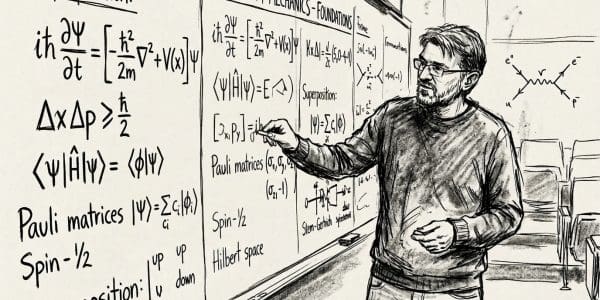
Vlatko Vedral is Professor of Quantum Information Science at the University of Oxford, a Serbian-born physicist who has spent three decades asking what entanglement is and what it can do. Entanglement is the link that lets two particles share one quantum state. As a PhD student in London he helped f
Image © Quantum Zeitgeist

Infleqtion and Riverlane are collaborating to advance quantum error correction in the UK, integrating Riverlane’s real-time tech with Infleqtion’s neutral atom platform.
Image © Quantum Zeitgeist

Quantum World Congress 2026 proved the market’s tolerance for hype, speculative roadmaps, and vanity qubit counts is rapidly wearing thin. The real conversation has shifted toward who is delivering useful execution today and making meaningful progress toward fault-tolerant quantum computing.
Image © Quantum Zeitgeist

Achieving complete quantum simulations once required resources beyond current capabilities; now, calculations previously intractable are possible using approximately ten thousand physical qubits. This new compilation framework estimates end-to-end runtimes, from 102 milliseconds on photonic or super
Image © Quantum Zeitgeist

From bits to qubits, converting classical information now accounts for circuit size, depth and resource needs previously overlooked in theoretical designs. This comprehensive survey moves beyond abstract concepts to examine techniques applicable to real-world datasets like sparse matrices and Boolea
Image © Quantum Zeitgeist

Ben Varcoe is Professor of Quantum Information Science at the University of Leeds, and a physicist who builds companies as well as experiments. He first made his name in 2000 with a paper in Nature that showed how to make light containing an exact number of photons, something physicists had found ve
Image © Quantum Zeitgeist

Poor entropy quality can cripple security, even with robust crypto—this guide helps OEMs build FPGA & MCU systems with truly unpredictable values for key generation and beyond, preparing for post-quantum threats.
Image © Quantum Zeitgeist

Accuracy reached a perfect score of 1. 0 using a new quantum machine learning framework, contrasting sharply with its initial value of zero and exceeding the 0. 76 achieved by the standard version.
Image © Quantum Zeitgeist
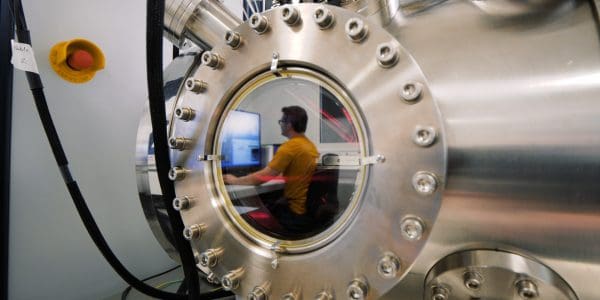
A £12.6 million program will utilize a University of Manchester instrument to implant individual atoms into materials with 20-nanometre precision, advancing quantum tech & sensors.
Image © Quantum Zeitgeist

IBM UK announced it has acquired Logiq Consulting, an NCSC-assured firm, to expand its cybersecurity work with UK public sector clients.
Image © Quantum Zeitgeist

A new international survey of 160 companies headquartered in 15 countries finds the quantum industry deeply dependent on cross-border supply chains, with 90% relying on foreign suppliers and 74% serving customers abroad. The study, undertaken by organizations including the Korea Quantum Industry Ass
Image © Quantum Zeitgeist
QURECA and Paraxiom partner to bring post-quantum transport security to Europe’s quantum-safe ecosystem. QURECA will act as a European ecosystem and market-entry channel for Paraxiom’s Post-Quantum Transport Gateway (PQTG), working towards a first European PQTG pilot.
Image © Quantum Zeitgeist

UCL and Siloton are co-developing a compact, quantum-enabled OCT device, funded by the NIHR, to monitor children’s eye health at home.
Image © Quantum Zeitgeist
Quantum X Labs is integrating its patent-pending atomic clock with Rydberg atom-based RF sensing, expanding its work in atom-based quantum sensing.
Image © Quantum Zeitgeist

Quantum computers face challenges with noise, as qubits are sensitive to their environment and errors accumulate, but the University of Washington’s AQET program is training students to combat these issues. As part of a 10-week industry mentorship project sponsored by AWS, students built a laborator
Image © Quantum Zeitgeist

IonQ and SDT announced a partnership to expand quantum computing and networking access in the Asia-Pacific region, starting with the Superion 256 system in South Korea.
Image © Quantum Zeitgeist

CaveroCore secures defence tech supply chains, identifying cloned devices and components.
Image © Quantum Zeitgeist

Early-stage quantum startups can pitch to potential funders at the Q2B26 x Chicago Quantum Summit, competing for $150K in prizes, including a $50K SAFE investment.
Image © Quantum Zeitgeist

Gradiant will present its vision for quantum technologies at New Space España, September 24-25, focusing on secure communications, precision sensing, and advanced quantum computing.
Image © Quantum Zeitgeist

Perfect test accuracy was achieved on a two-state quantum system using just 500 measurements. This contrasts with existing methods which struggle as complexity increases, requiring substantially more computational effort for even simple tasks. An adaptive learning framework utilising photonic system
Image © Quantum Zeitgeist
Element Six presents scalable diamond quantum platforms for sensing, networking, and computing at Quantum World Congress 2026.
Image © Quantum Zeitgeist

A global survey of 160 companies reveals most Quantum Industry Canada firms rely on international suppliers & customers—inputs sourced from 36 countries.
Image © Quantum Zeitgeist

Florida International University will gain access to the IonQ Superion system, a 256-qubit quantum computer, by late 2027.
Image © Quantum Zeitgeist

IonQ researchers tested a quantum generative machine learning model on satellite radar data, revealing potential for insights where classical methods struggle.
Image © Quantum Zeitgeist
In the Q4Bio Challenge, research teams sought scalable quantum algorithms for healthcare, competing for $2 million in prize money, and five of the six finalists used IBM quantum hardware for their research. Q4Bio aims to accelerate development of quantum algorithms for healthcare that can run on qua
Image © Quantum Zeitgeist

Duke Quantum Center researchers observed string-breaking—particle-antiparticle formation—on a quantum simulator, a key step in probing high-energy physics.
Image © Quantum Zeitgeist

Transatlantic partnership signed to accelerate fusion energy transatlantic partnership fusion Transatlantic partnership signed to accelerate fusion energy Posted on Wednesday 23 September 2026 Higher education institutions in the United States and the United Kingdom have established a transatlantic
Image © Quantum Zeitgeist

Hawthorn Photonics streamlines its portfolio, rebranding AdvR products as Covesion, and on September 23, 2026, AdvR, Inc. becomes Hawthorn Photonics (US), Inc., focusing on areas like quantum photonics.
Image © Quantum Zeitgeist

Photonic Inc. & Microsoft collaborate on quantum resource estimation, leveraging the SHYPS family of Quantum Low-Density Parity Check codes.
Image © Quantum Zeitgeist