Active Programme · 2025 onwards
EPSRC Quantum Technology Career Acceleration Fellowships
EPSRC fellowships for 11 early-career quantum technology researchers at UK universities.
Role: Partner
Themes: Skills and training, Computing, Sensing

University · Durham
In March 2026 Durham physicist Simon Cornish won almost £10m from EPSRC for a national programme, with Birmingham, Imperial and King's College London, that arranges ultracold polar molecules in optical tweezers and lattices to build quantum simulators of materials. Quantum networking and photonics get attention too: two Durham researchers, Tobias Franzen and Liam Gallagher, were among the 11 EPSRC Quantum Technology Career Acceleration Fellows named in April 2025, working on ytterbium-ion quantum networking and on devices for entangling photons. The university is a partner in the Birmingham-led QuSIT hub and was in the earlier Quantum Computing and Simulation Hub.
Durham University is a university in Durham with four quantum projects in this directory. It is a partner in 4 UK projects, including EPSRC Quantum Technology Career Acceleration Fellowships, QCi3 and QuSIT.
Sources: Durham to lead new era of quantum science research (Durham University) · Durham physicists win £3M quantum fellowships (Quantum Zeitgeist) · New hub focussing on quantum sensing, imaging and timing (University of Birmingham) · QCS Hub partners (Quantum Computing and Simulation Hub)
EPSRC fellowships for 11 early-career quantum technology researchers at UK universities.
Role: Partner
Themes: Skills and training, Computing, Sensing
QCi3
The national research hub for quantum computing, led by the University of Oxford. It works on scalable and networked quantum computers.
Role: Partner
Funding: £21.9m
Themes: Computing, Networks, Software and algorithms
QuSIT
A national research hub for quantum sensing, imaging and timing, led by the University of Birmingham.
Role: Partner
Funding: £22m
Themes: Sensing, Imaging, Timing and navigation
QCS
The phase 2 national hub for quantum computing and simulation, led by the University of Oxford. It ran from 2019 to 2024.
Role: Partner
Funding: £27.3m
Themes: Computing, Software and algorithms
Recent articles from Quantum Zeitgeist that mention Durham University.
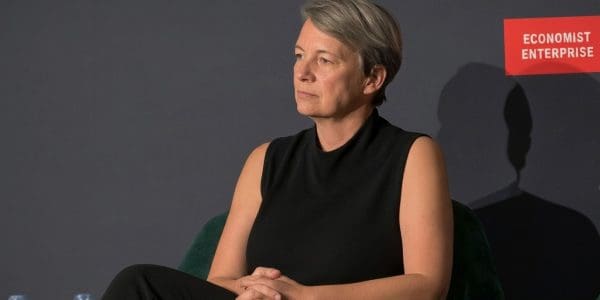
Michelle Simmons built the world’s smallest transistor from a single phosphorus atom, then founded Australia’s first quantum computing company to take the method to market. Her bet is uniform qubits made slowly against variable ones made with foundry tools, and the published record, eleven qubits an
Image © Quantum Zeitgeist

Researchers optimized state networks in bialkali molecules, identifying a closed loop of 4 states with minimal population leakage.
Image © Quantum Zeitgeist

Durham University researchers demonstrated coherent interactions between a Rydberg atom & polar molecule, tuning two atom–molecule pair states into resonance.
Image © Quantum Zeitgeist

Can complex quantum behaviour be sustained within a dimension created entirely by internal molecular properties. Recent experiments with rubidium caeside molecules demonstrate coherence lasting approximately 500 times the tunnelling period, even across a synthetic lattice of eight states. This exten
Image © Quantum Zeitgeist
News from Quantum Zeitgeist.
Logos and names are trademarks of their respective owners, used to identify them. No endorsement implied.