
Active Testbed · 2024 onwards
QUARTET trapped-ion testbed (Oxford Ionics)
QUARTET
A trapped-ion quantum computing testbed built for the National Quantum Computing Centre under its 2024 testbed programme.
Role: Lead
Themes: Computing

Company · Oxford
Oxford Ionics builds trapped-ion quantum computers in which the ions are controlled by electronics on a chip made in standard semiconductor fabs, an approach it calls Electronic Qubit Control. Chris Ballance and Tom Harty founded it in Oxford. In August 2025 it installed QUARTET, a full-stack trapped-ion machine, at the National Quantum Computing Centre under the NQCC testbed programme. IonQ completed its purchase of the company in September 2025 and uses it as a UK base for work with universities and public-sector partners.
Oxford Ionics is an Oxford company. It leads 1 UK project (QUARTET) and is a partner in 7 more. People profiled here include Chris Ballance (Co-Founder and CEO) and Tom Harty (Co-Founder and CTO).
Sources: Oxford Ionics · Chris Ballance, the British quantum entrepreneur who put ion traps on a chip | Quantum Zeitgeist · Oxford Ionics installs quantum computer at UK's NQCC | Quantum Zeitgeist · IonQ completes acquisition of Oxford Ionics | IonQ
QUARTET
A trapped-ion quantum computing testbed built for the National Quantum Computing Centre under its 2024 testbed programme.
Role: Lead
Themes: Computing
QCi3
The national research hub for quantum computing, led by the University of Oxford. It works on scalable and networked quantum computers.
Role: Partner
Funding: £21.9m
Themes: Computing, Networks, Software and algorithms
A £30m programme that paid seven companies to build prototype quantum computers, known as testbeds, at the NQCC in Harwell.
Role: Partner
Funding: £30m
Themes: Computing
OAQ Testbed
A TreQ-led consortium that built a modular quantum computing testbed in Oxfordshire that mixes processors, control systems and software from different suppliers.
Role: Partner
Themes: Computing
Quantum Missions pilot
An Innovate UK competition that funded industry projects in quantum computing and quantum networks towards the UK quantum missions.
Role: Partner
Themes: Computing, Networks
AutoQT
A Riverlane-led consortium developing automated methods to control and tune large numbers of qubits.
Role: Partner
Themes: Computing, Software and algorithms
DISCOVERY
An M Squared-led consortium that worked on the photonics needed to scale neutral-atom, trapped-ion and optical quantum computers.
Role: Partner
Themes: Computing
NISQ.OS
A Riverlane-led consortium that built Deltaflow.OS, an operating system meant to run the same software on different kinds of quantum hardware.
Role: Partner
Funding: £7.6m
Themes: Computing, Software and algorithms
Recent articles from Quantum Zeitgeist that mention Oxford Ionics.

IBM’s $2 billion investment, split between direct funding and a new venture called Anderon, signals a decisive shift in the quantum computing landscape, from chasing qubit counts to securing a domestic supply chain for advanced wafer manufacturing. This move directly addresses a bottleneck seen in m
Image © Quantum Zeitgeist
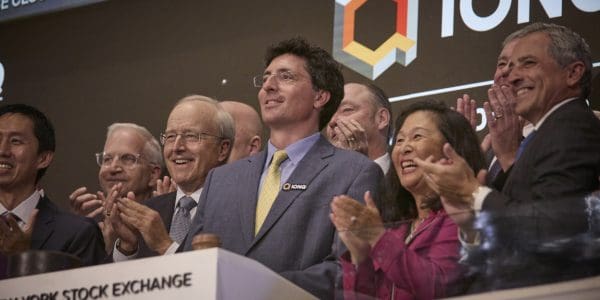
At the Investor Day 2026, IonQ detailed plans for growth, anticipating $450M–$460M in revenue & highlighting vertical integration and mass-manufacturing capabilities.
Image © Quantum Zeitgeist
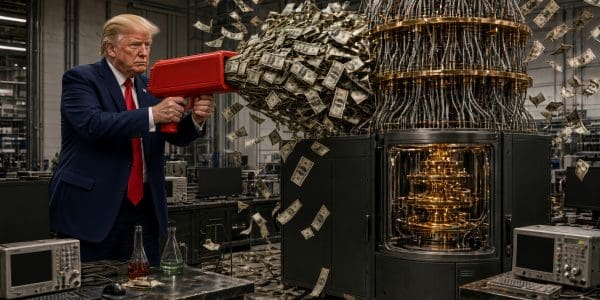
IonQ’s claim that a 20,000-qubit machine could crack Bitcoin encryption within 26 days is a startling escalation and reignites fears about the most popular cryptocurrency and others too. This shows a central tension currently shaping quantum development: the race between building bigger machines and
Image © Quantum Zeitgeist

IonQ announced IonQ Superion 256, its sixth-generation quantum computing platform, and the first in the Superion platform expected for all future compute products. The company fabricated its first fully integrated 256-qubit quantum processing units (QPUs) at SkyWater, designed to be built by the hun
Image © Quantum Zeitgeist
News from Quantum Zeitgeist.
Logos and names are trademarks of their respective owners, used to identify them. No endorsement implied.