Open Architecture Quantum (OAQ) Testbed
OAQ Testbed
A TreQ-led consortium that built a modular quantum computing testbed in Oxfordshire that mixes processors, control systems and software from different suppliers.
Role: Partner
Themes: Computing
Start-up · London
Qruise writes machine-learning software that builds physics-based digital twins of quantum devices and uses them to automate calibration and pulse design, shortening the time it takes to bring up a new processor. Its UK company, Qruise Limited, was registered in London in July 2023. In TreQ's Innovate UK-funded Open Architecture Quantum testbed in Oxfordshire (March 2025 to March 2026) it worked on an open interface specification so its AI calibration can run on hardware from different suppliers, alongside Q-CTRL, Oxford Ionics and Rigetti. In April 2026 it demonstrated automated bring-up on Quantum Machines' OPX1000 controllers, and in September 2026 relaunched its QruiseML modelling tool.
Qruise, based in London, is a start-up. It appears as a partner in OAQ Testbed.

Sources: Qruise · QRUISE LIMITED (Companies House) · Open Architecture Quantum Testbed (UKRI Gateway to Research) · TreQ builds multi-vendor quantum system in three months (Quantum Zeitgeist, April 2026)
OAQ Testbed
A TreQ-led consortium that built a modular quantum computing testbed in Oxfordshire that mixes processors, control systems and software from different suppliers.
Role: Partner
Themes: Computing
Recent articles from Quantum Zeitgeist that mention Qruise.
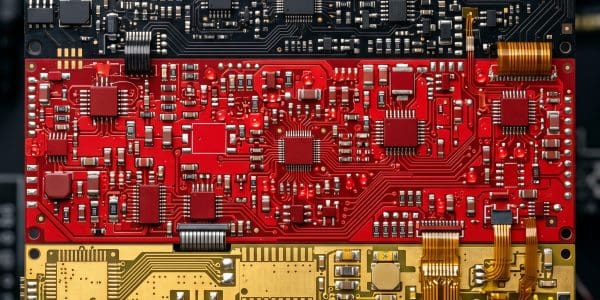
Germany quantum computing companies in 2026: IQM Munich LRZ, planqc, eleQtron, Q.ANT, Quantum Brilliance, HQS, Kiutra, Qruise, IBM Ehningen. Munich Quantum Valley ecosystem.
Image © Quantum Zeitgeist
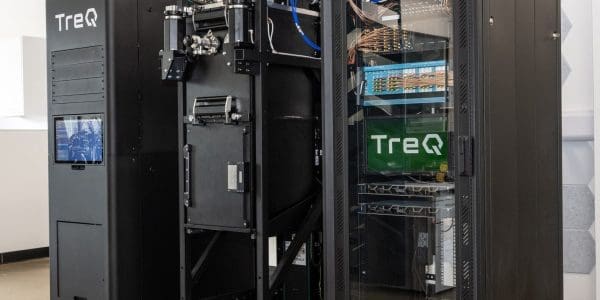
TreQ has developed and deployed an Open-Architecture Quantum (OAQ) Testbed, a multi-vendor system currently being used by partners as part of Innovate UK’s Quantum Mission Pilot. Built in three months, the system features independent processor, control, and software layers, enabling reconfiguration
Image © Quantum Zeitgeist
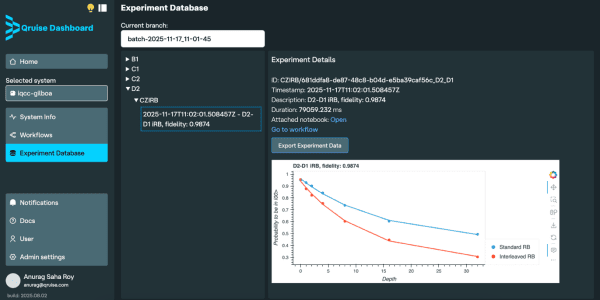
Qruise has demonstrated automated bring-up software, QruiseOS, at the Israeli Quantum Computing Center, achieving a quantum processing unit (QPU) bring-up time of approximately 15 minutes. This integration combines automated calibration, data management, and hybrid quantum-classical control workflow
Image © Quantum Zeitgeist
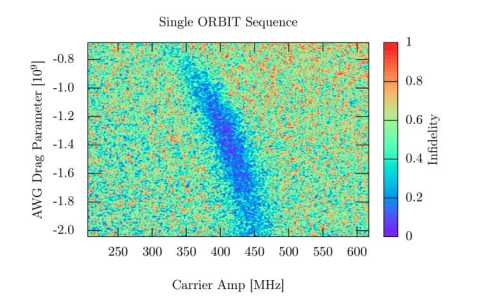
Comprehensive testing of optimisation algorithms reveals that the Covariance Matrix Adaptation Evolution Strategy consistently outperforms others when calibrating devices, even with complex systems requiring many adjustable parameters
Image © Quantum Zeitgeist
News from Quantum Zeitgeist.
Logos and names are trademarks of their respective owners, used to identify them. No endorsement implied.