
Completed Programme · 2019 to 2025
National Timing Centre R&D programme
NTC
An NPL-led programme to build a network of atomic clocks so that the UK relies less on satellite timing signals.
Role: Partner
Funding: £36m
Themes: Timing and navigation

University · Guildford
A qubit made from superfluid helium-3 is the newest idea from the University of Surrey's Quantum Sciences Group: in September 2026 Priya Sharma and Eran Ginossar, with Northwestern's Jens Koch, published the SHOQ design in npj Quantum Information, predicting errors about 100 times lower than superconducting qubits. Later that month Sharma won a £1.3 million UKRI Future Leaders Fellowship. At its Ion Beam Centre, an EPSRC national facility, SIMPLE tools implant single impurity atoms with nanometre precision for donor spin qubits and single photon sources. Surrey also partnered in the Quantum Computing and Simulation Hub and hosted a node of NPL's National Timing Centre programme.
University of Surrey, in Guildford, appears in two UK quantum projects listed here. It appears as a partner in NTC and QCS.
Sources: University of Surrey: Superfluid-based qubit design could be key to scaling up quantum computers (7 September 2026) · University of Surrey: Surrey researchers awarded £2.7m Future Leaders Fellowships · University of Surrey: Quantum technology with deterministic ion implantation · Gateway to Research: Quantum Computing and Simulation Hub (EP/T001062/1) · NPL: National Timing Centre R&D end of programme report 2019 to 2025
NTC
An NPL-led programme to build a network of atomic clocks so that the UK relies less on satellite timing signals.
Role: Partner
Funding: £36m
Themes: Timing and navigation
QCS
The phase 2 national hub for quantum computing and simulation, led by the University of Oxford. It ran from 2019 to 2024.
Role: Partner
Funding: £27.3m
Themes: Computing, Software and algorithms
Recent articles from Quantum Zeitgeist that mention University of Surrey.
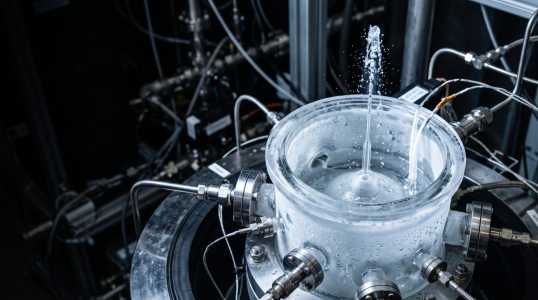
Dr. Priya Sharma received £1.3M to develop the Superfluid Helium Oscillator Quantum (SHOQ) device, a novel approach using superfluid helium-3 for more stable qubits.
Image © Quantum Zeitgeist

Researchers from the University of Surrey have introduced a conceptual design for a new type of qubit, using superfluid helium-3, that could be much less vulnerable to errors. The team’s calculations predict error rates around 100 times lower than conventional superconducting qubits.
Image © Quantum Zeitgeist
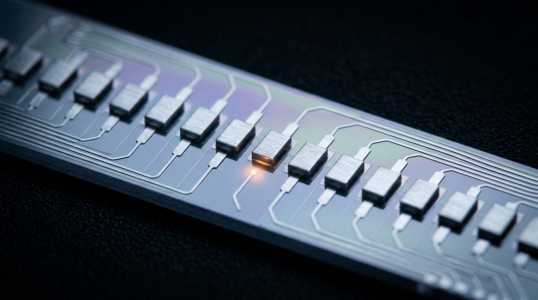
Researchers propose a quantum device—a superfluid weak link with a mechanical element—that could function as a qubit, potentially achieving coherence times of up to one second.
Image © Quantum Zeitgeist

A 0. 21% error in calculating the ground state of boron-10 represents a new level of precision for this type of quantum simulation. This result, achieved using a specific qubit mapping strategy, outperforms alternative methods which yielded errors of 3.
Image © Quantum Zeitgeist
Research, commercial and investment relationships, by year. Partners with a profile here are linked.
NPL Research 2021
Recorded on NPL's profile.
News from Quantum Zeitgeist.
Logos and names are trademarks of their respective owners, used to identify them. No endorsement implied.