
NTC: National Timing Centre R&D programme
An NPL-led programme to build a network of atomic clocks so that the UK relies less on satellite timing signals.
Project data last updated 11 October 2026
About this project
The government announced £36m for the National Timing Centre in February 2020. The aim is a resilient network of clocks across the UK that can give accurate time to emergency services, the energy grid and banks without depending on satellites.
The UKRI-funded R&D phase ran from 2019 to March 2025. NPL designed and tested a secure time scale, known as RETSI, across two sites. The programme also set up Time and Frequency Innovation Nodes at the University of Strathclyde, Cranfield University and the University of Surrey. As of April 2025 a five-year follow-on programme was being planned.
Who leads it

Lead organisation

NPL
Research organisation · Teddington
NPL in Teddington tests quantum clocks, sensors and computers for UK industry and helped found NMI-Q, the G7 metrology group for quantum standards.
Partners (5)

University of Strathclyde
University · Glasgow

Cranfield University
University · Cranfield

University of Surrey
University · Guildford

University of Birmingham
University · Birmingham

BT Group
Company · London
Funders

UK Research and Innovation
Funder · Swindon
In the news
Quantum Zeitgeist articles naming the lead organisation or partners. They may not be about this project.
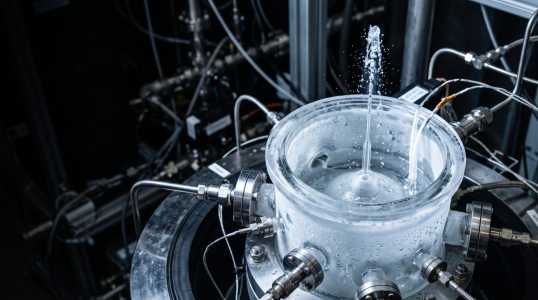
Leverhulme backs superfluid helium qubit design with £1.3M UKRI fellowship, read on Quantum Zeitgeist
Dr. Priya Sharma received £1.3M to develop the Superfluid Helium Oscillator Quantum (SHOQ) device, a novel approach using superfluid helium-3 for more stable qubits.
Image © Quantum Zeitgeist

University of Birmingham’s Bhattacharya leads fusion materials project, read on Quantum Zeitgeist
The University of Birmingham & EPRI’s £2.63 million FURESHMA program will test advanced boride & carbide shielding materials, vital for durable fusion reactor components.
Image © Quantum Zeitgeist
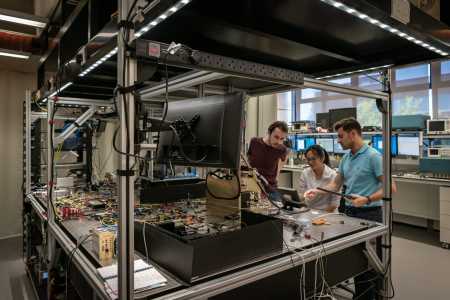
QuSIT to boost UK quantum sensing and imaging projects with £774k grant, read on Quantum Zeitgeist
The UK Quantum Technology Research Hub in Sensing, Imaging and Timing (QuSIT) has completed the application and grant-awarding phase of the QuSIT Accelerating Capability Fund (ACF) grant, allocating a total of £774k across multiple projects. This ACF Grant, funded by the Engineering and Physical Sci
Image © Quantum Zeitgeist

University of Surrey designs superfluid helium qubit to cut errors by 100x, read on Quantum Zeitgeist
Researchers from the University of Surrey have introduced a conceptual design for a new type of qubit, using superfluid helium-3, that could be much less vulnerable to errors. The team’s calculations predict error rates around 100 times lower than conventional superconducting qubits.
Image © Quantum Zeitgeist
Sources
Related projects
- Active Hub · 2024 to 2029
UK Hub for Quantum Enabled Position, Navigation and Timing
QEPNT
A national research hub for quantum position, navigation and timing, led by the University of Glasgow. It aims to reduce reliance on satellite signals such as GPS.
Led by University of Glasgow
Funding: £21.9m
Themes: Timing and navigation, Sensing, Defence and security
- Active Hub · 2024 to 2029
UK Quantum Technology Hub in Sensing, Imaging and Timing
QuSIT
A national research hub for quantum sensing, imaging and timing, led by the University of Birmingham.
Led by University of Birmingham
Funding: £22m
Themes: Sensing, Imaging, Timing and navigation
- Active Mission · 2023 to 2030
Quantum Mission 4: Quantum navigation
Mission 4
A government goal that by 2030 quantum navigation systems, including clocks, will be deployed on aircraft.
Led by Department for Science, Innovation and Technology
Themes: Timing and navigation, Sensing