
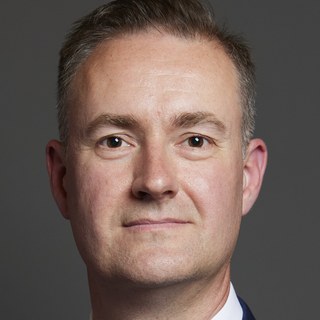
Chris McDonald
Minister of State for Science, Innovation and Investment
Department for Science, Innovation and Technology
Photo: Laurie Noble, CC BY 3.0, via Wikimedia CommonsA government goal that by 2035 there will be accessible, UK-based quantum computers able to run one trillion operations.
All five missions, with their official goals, related hubs and projects, are on one page: UK Quantum Mission 1 on the missions page.
Project data last updated 11 October 2026
Mission 1 is one of five quantum missions set out with the National Quantum Strategy, published in March 2023. It says that by 2035 there will be accessible, UK-based quantum computers capable of running one trillion operations, supporting applications that bring benefits well beyond classical supercomputers across key sectors of the economy.
In June 2025 the government said £670 million would go to quantum computing through the Industrial Strategy, and gave the National Quantum Computing Centre a 10-year funding settlement. techUK reported that more than £500 million of this would be spent over four years from 2026/27. In March 2026 the government announced a package worth up to £2 billion, including £1 billion to procure large-scale quantum computers and over £500 million for quantum computing over four years.
Minister of State for Science, Innovation and Investment
Department for Science, Innovation and Technology
Photo: Laurie Noble, CC BY 3.0, via Wikimedia CommonsGovernment · London
The government department behind the National Quantum Strategy, its five missions and the £2bn quantum package of March 2026, including ProQure.
Government · London
Quantum Zeitgeist articles naming the lead organisation or partners. They may not be about this project.

The theorist who taught British quantum physics to cost itself honestly, and who now chairs the board advising on a national quantum strategy worth billions.
Image © Quantum Zeitgeist

DSIT was abolished on 21 July and the statement announcing it never mentions quantum. The funded delivery bodies are insulated, but the Office for Quantum and its line to the prime minister are not, and that is how a national programme decoheres.
Image © Quantum Zeitgeist

The incoming prime minister has reportedly asked officials to draw up plans to abolish DSIT. Here is how that decision could play out for the UK quantum sector, from quiet climbdown to compound failure.
Image © Quantum Zeitgeist

A £10m network launch will coordinate UK quantum technology standards, boosting British trade & leadership.
Image © Quantum Zeitgeist
QATCH
A four-year programme on quantum software, algorithms and verification, led by the University of Edinburgh's Quantum Software Lab with the NQCC.
Led by Quantum Software Lab
Funding: £20m
Themes: Computing, Software and algorithms
QCi3
The national research hub for quantum computing, led by the University of Oxford. It works on scalable and networked quantum computers.
Led by University of Oxford
Funding: £21.9m
Themes: Computing, Networks, Software and algorithms
SparQ
The NQCC's programme for helping UK companies and researchers find uses for quantum computers and get access to them.
Led by NQCC
Themes: Computing, Software and algorithms, Skills and training
