
Frazer-Nash Consultancy
Company · Leatherhead
KBR-owned Leatherhead consultancy that ran offshore wind farm optimisation on ORCA photonic hardware with The Crown Estate under NQCC SparQ.
Frazer-Nash, ORCA Computing and The Crown Estate looked at whether quantum optimisation can help renewable energy planning.
Project data last updated 11 October 2026
Frazer-Nash Consultancy led the consortium with ORCA Computing, The Crown Estate and the NQCC. The project asked whether quantum computers could help with new computing problems in the renewable sector, from batteries to wind farms.
It was one of 12 SparQ proof of concept projects announced in November 2024, which ran until the end of March 2025.
Company · Leatherhead
KBR-owned Leatherhead consultancy that ran offshore wind farm optimisation on ORCA photonic hardware with The Crown Estate under NQCC SparQ.

Company · London

Government · London

Research organisation · Harwell
Research organisation · Harwell
Quantum Zeitgeist articles naming the lead organisation or partners. They may not be about this project.

The Quantum Software Lab (QSL) at the University of Edinburgh has become a globally recognized hub for creating software solutions, and with its strategic partnership with the UK’s National Quantum Computing Centre (NQCC), now has more than 70 researchers. In three years, the QSL is poised to lead a
Image © Quantum Zeitgeist

The NQCC and University of Bristol offer two intensive, six-week online programs in quantum information and computation, ideal for STEM professionals.
Image © Quantum Zeitgeist
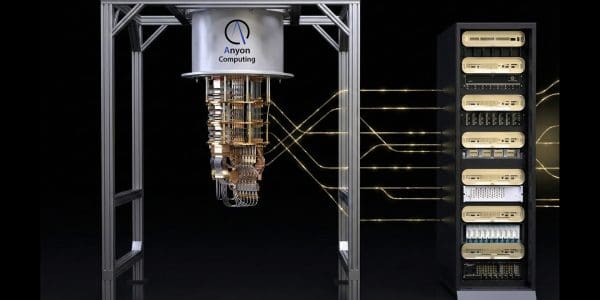
Anyon Computing unveiled a new open quantum control system built on NVIDIA NVQLink, designed so its microwave quantum control cluster and quantum processors join GPU and CPU compute nodes as co-processor nodes of a single supercomputing machine. The system will be open-sourced and serve as the contr
Image © Quantum Zeitgeist
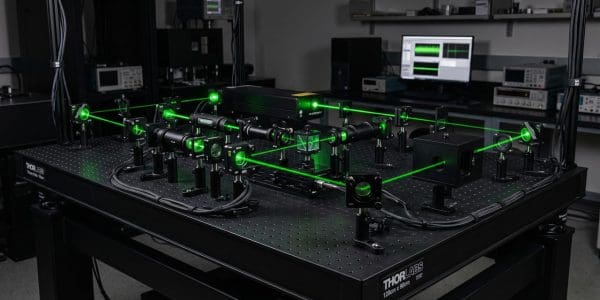
Photonic quantum computers encode a qubit in a single particle of light, steer it through a programmable maze of glass and count it with superconducting detectors, and the chips come off ordinary 300 millimetre semiconductor lines. As of mid-2026 no photonic platform has demonstrated a peer-reviewed
Image © Quantum Zeitgeist
QATCH
A four-year programme on quantum software, algorithms and verification, led by the University of Edinburgh's Quantum Software Lab with the NQCC.
Led by Quantum Software Lab
Funding: £20m
Themes: Computing, Software and algorithms
QCi3
The national research hub for quantum computing, led by the University of Oxford. It works on scalable and networked quantum computers.
Led by University of Oxford
Funding: £21.9m
Themes: Computing, Networks, Software and algorithms
Mission 1
A government goal that by 2035 there will be accessible, UK-based quantum computers able to run one trillion operations.
Led by Department for Science, Innovation and Technology
Themes: Computing, Software and algorithms