
NQCC: National Quantum Computing Centre
The UK's national laboratory for quantum computing, based at the Rutherford Appleton Laboratory on the Harwell Campus in Oxfordshire.
This page covers the programme's funding and partners. The main page is the NQCC profile.
Project data last updated 11 October 2026
About this project
The NQCC was launched in September 2020 as part of the National Quantum Technologies Programme. EPSRC provides its core funding, and its programme is delivered jointly by EPSRC and STFC. It works with businesses, government and researchers to turn UK research into working quantum computers and to grow the number of people who can use them.
Its purpose-built 4,000 square metre facility at Harwell was opened on 25 October 2024. The government said the building will house 12 quantum computers. The centre hosts the seven testbeds from its £30m testbed programme and runs the SparQ programme for users in industry and academia.
Who leads it

Elham Kashefi
Chief Scientist, NQCC; Professor, University of Edinburgh
NQCC · Quantum Software Lab · University of Edinburgh
Photo: Andrej Bauer, CC BY-SA 2.5 si, via Wikimedia Commons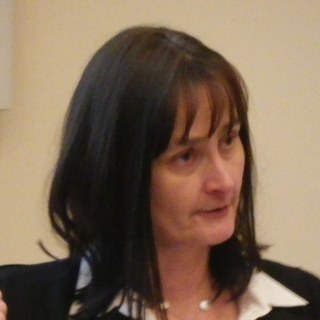
Michele Dougherty
Executive Chair, STFC
Science and Technology Facilities Council · UK Research and Innovation
Photo: TowardsTheLight, CC BY-SA 4.0, via Wikimedia Commons


Lead organisation

NQCC
Research organisation · Harwell
The UK's national quantum computing lab at Harwell: seven hardware testbeds, the SparQ user programme and the UK's first 100-qubit machine.
Partners (1)

Science and Technology Facilities Council
National lab · Swindon
Funders

UK Research and Innovation
Funder · Swindon

Engineering and Physical Sciences Research Council
Funder · Swindon
-
Science and Technology Facilities Council
National lab · Swindon
In the news
Quantum Zeitgeist articles about NQCC, then ones naming its lead or partners.

A recap of the Quantum Software Lab’s Quantum Fringe in Edinburgh, read on Quantum Zeitgeist
The Quantum Software Lab (QSL) at the University of Edinburgh has become a globally recognized hub for creating software solutions, and with its strategic partnership with the UK’s National Quantum Computing Centre (NQCC), now has more than 70 researchers. In three years, the QSL is poised to lead a
Image © Quantum Zeitgeist

Bristol and NQCC launch intensive quantum computing courses, read on Quantum Zeitgeist
The NQCC and University of Bristol offer two intensive, six-week online programs in quantum information and computation, ideal for STEM professionals.
Image © Quantum Zeitgeist

NQCC-Bristol offers bursaries for quantum start-ups, read on Quantum Zeitgeist
The NQCC-Bristol is supporting the UK quantum start-up ecosystem, offering bursaries for intensive, six-week online courses in quantum information and computation.
Image © Quantum Zeitgeist
EPSRC Funds NQCC Studentships Via £6M Industrial Landscape Awards, read on Quantum Zeitgeist
The NQCC has six doctoral studentships available for UK universities, funded by a £6 million EPSRC Industrial Doctoral Landscape Awards program.
Image © Quantum Zeitgeist
Sources
- GOV.UK: New national quantum laboratory to open up access to quantum computing (25 October 2024) (gov.uk)
- NQCC: Breaking-ground ceremony (nqcc.ac.uk)
- NQCC: About us (nqcc.ac.uk)
Related projects
- Active Programme · 2022 onwards
SparQ quantum readiness programme
SparQ
The NQCC's programme for helping UK companies and researchers find uses for quantum computers and get access to them.
Led by NQCC
Themes: Computing, Software and algorithms, Skills and training
- Active Programme · 2026 onwards
Quantum Advantage TurboCHarger
QATCH
A four-year programme on quantum software, algorithms and verification, led by the University of Edinburgh's Quantum Software Lab with the NQCC.
Led by Quantum Software Lab
Funding: £20m
Themes: Computing, Software and algorithms
- Active Programme · 2025 onwards
EPSRC Quantum Technology Career Acceleration Fellowships
EPSRC fellowships for 11 early-career quantum technology researchers at UK universities.
Led by Engineering and Physical Sciences Research Council
Themes: Skills and training, Computing, Sensing