
Active Programme · 2025 onwards
EPSRC Quantum Technology Career Acceleration Fellowships
EPSRC fellowships for 11 early-career quantum technology researchers at UK universities.
Role: Lead, Funder
Themes: Skills and training, Computing, Sensing

Funder · Swindon
Most of the UK's university quantum research is paid for by EPSRC, the UKRI council for engineering and the physical sciences, based in Swindon. It is the main funder of the five national quantum research hubs that started in December 2024 (QCi3, IQN, QuSIT, QEPNT and Q-BIOMED), worth roughly £22m to £24m each, and with STFC it provided the NQCC's initial £93m. People are the other strand: 11 Quantum Technology Career Acceleration Fellowships worth £15m were announced in April 2025, and a single Centre for Quantum Commercialisation Skills, worth up to £11.3m, is due to start in December 2026.
Engineering and Physical Sciences Research Council is a public funder based in Swindon. In this directory it leads EPSRC Quantum Technology Career Acceleration Fellowships and Centre for Quantum Commercialisation Skills and is a partner in 1 more. It funds 15 projects listed here, including SPOQC and EPSRC Quantum Technology Career Acceleration Fellowships. Profiled here: Charlotte Deane (Executive Chair).
Sources: Hub for Quantum Computing via Integrated and Interconnected Implementations, EP/Z53318X/1 (Gateway to Research) · New quantum research hub for healthcare launched (UCL) · New national quantum laboratory to open up access to quantum computing (GOV.UK) · Investing in quantum technology fellowships for future success (UKRI) · Centre for Quantum Commercialisation Skills funding opportunity (UKRI)
EPSRC fellowships for 11 early-career quantum technology researchers at UK universities.
Role: Lead, Funder
Themes: Skills and training, Computing, Sensing
A planned national centre, funded by EPSRC, to teach researchers the skills needed to turn quantum research into companies and products.
Role: Lead, Funder
Themes: Skills and training
NQTP
The UK's national programme for quantum technologies, set up in 2014 as a partnership between government, academia and industry.
Role: Partner, Funder
Themes: Computing, Sensing, Imaging, Timing and navigation, Communications, Networks, Skills and training
SPOQC
A UK CubeSat mission to test quantum key distribution between a satellite and a ground station in Edinburgh.
Role: Funder
Themes: Communications, Networks
EPSRC fellowships for 11 early-career quantum technology researchers at UK universities.
Role: Lead, Funder
Themes: Skills and training, Computing, Sensing
A doctoral training centre run by the universities of Sussex and Bristol to train PhD researchers in quantum technology.
Role: Funder
Funding: £24m
Themes: Skills and training, Computing
QCi3
The national research hub for quantum computing, led by the University of Oxford. It works on scalable and networked quantum computers.
Role: Funder
Funding: £21.9m
Themes: Computing, Networks, Software and algorithms
IQN
A national research hub building quantum networks, from local links to satellite connections. Heriot-Watt University leads it.
Role: Funder
Funding: £21.9m
Themes: Networks, Communications
QEPNT
A national research hub for quantum position, navigation and timing, led by the University of Glasgow. It aims to reduce reliance on satellite signals such as GPS.
Role: Funder
Funding: £21.9m
Themes: Timing and navigation, Sensing, Defence and security
Q-BIOMED
A national research hub that develops quantum sensors for earlier diagnosis of disease. UCL and the University of Cambridge lead it.
Role: Funder
Funding: £24m
Themes: Sensing, Biomedical and health, Imaging
QuSIT
A national research hub for quantum sensing, imaging and timing, led by the University of Birmingham.
Role: Funder
Funding: £22m
Themes: Sensing, Imaging, Timing and navigation
NQCC
The UK's national laboratory for quantum computing, based at the Rutherford Appleton Laboratory on the Harwell Campus in Oxfordshire.
Role: Funder
Funding: £93m
Themes: Computing, Software and algorithms, Skills and training
NQTP
The UK's national programme for quantum technologies, set up in 2014 as a partnership between government, academia and industry.
Role: Partner, Funder
Themes: Computing, Sensing, Imaging, Timing and navigation, Communications, Networks, Skills and training
A planned national centre, funded by EPSRC, to teach researchers the skills needed to turn quantum research into companies and products.
Role: Lead, Funder
Themes: Skills and training
The phase 2 national hub for quantum communications, led by the University of York. The hub's work ran from 2019 to 2024.
Role: Funder
Funding: £23.5m
Themes: Communications, Networks
QuantIC
The phase 2 national hub for quantum imaging, led by the University of Glasgow. Its grant ran from December 2019 to May 2025.
Role: Funder
Funding: £25m
Themes: Imaging, Sensing
QCS
The phase 2 national hub for quantum computing and simulation, led by the University of Oxford. It ran from 2019 to 2024.
Role: Funder
Funding: £27.3m
Themes: Computing, Software and algorithms
The phase 2 national hub for quantum sensors and clocks, led by the University of Birmingham. It ran from 2019 to 2024.
Role: Funder
Funding: £28.6m
Themes: Sensing, Timing and navigation
Recent articles from Quantum Zeitgeist that mention Engineering and Physical Sciences Research Council.
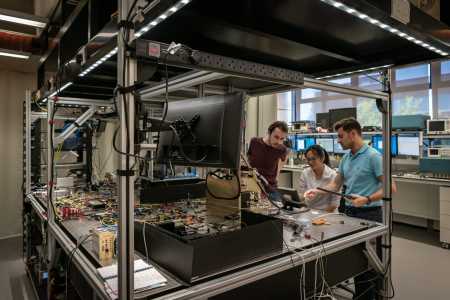
The UK Quantum Technology Research Hub in Sensing, Imaging and Timing (QuSIT) has completed the application and grant-awarding phase of the QuSIT Accelerating Capability Fund (ACF) grant, allocating a total of £774k across multiple projects. This ACF Grant, funded by the Engineering and Physical Sci
Image © Quantum Zeitgeist

Oxford & UCL will share £60 million to develop next-gen AI, aiming to lower the financial barriers to large-scale computing power for businesses.
Image © Quantum Zeitgeist

Q-BIOMED received £902,000 from EPSRC to expand partnerships and strengthen its ability to deliver quantum technologies for healthcare applications. This investment supports work packages focused on identifying clinical needs and prioritizing quantum sensing applications to improve diagnosis, monito
Image © Quantum Zeitgeist
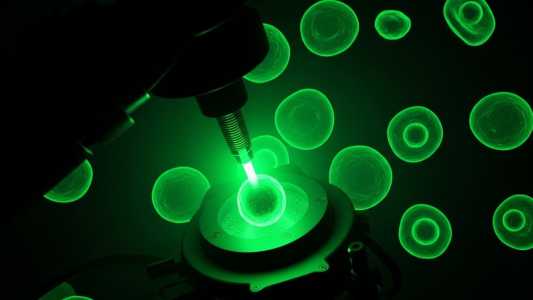
A £2 million project will utilize quantum sensors to track how immune cells interact with tumors, aiming to understand why some cancer immunotherapies are ineffective. By monitoring metabolic changes and free radical production within cells, researchers hope to improve treatment and earlier diagnosi
Image © Quantum Zeitgeist
All 11 articles mentioning Engineering and Physical Sciences Research Council
Research, commercial and investment relationships, by year. Partners with a profile here are linked.
University College London Commercial 2020
Recorded on University College London's profile.
Imperial College London Commercial 2019
Recorded on Imperial College London's profile.
News from Quantum Zeitgeist.
Logos and names are trademarks of their respective owners, used to identify them. No endorsement implied.