Gerald Buller
Director, Integrated Quantum Networks Hub; Professor of Physics, Heriot-Watt University
Heriot-Watt University
The phase 2 national hub for quantum communications, led by the University of York. The hub's work ran from 2019 to 2024.
Project data last updated 11 October 2026
The Quantum Communications Hub led the communications strand of the UK National Quantum Technologies Programme from 2014 to 2024. In 2019 it was awarded £23.5m for a second five-year phase. The University of York led it with nine partner universities. Professor Tim Spiller was principal investigator.
The hub worked on quantum key distribution, quantum networks and satellite quantum communications. It is now complete, and the Integrated Quantum Networks hub carries on this area of work.
Director, Integrated Quantum Networks Hub; Professor of Physics, Heriot-Watt University
Heriot-Watt University
Former Director, Quantum Communications Hub (2014 to 2024); Professor, University of York
University of York · Quantum Communications Hub

University · York
Host of the national Quantum Communications Hub to 2024; its researchers built a quantum source payload for the SPOQC CubeSat launched in March 2026.
University · Bristol
University · Cambridge

University · Glasgow
University · Edinburgh

University · Canterbury

University · Oxford

University · Belfast

University · Sheffield

University · Glasgow

Research organisation · Teddington
Company · London

Company · Bristol
Company · London

Company · Sheffield

Research organisation · Glasgow

Funder · Swindon

Funder · Swindon
Quantum Zeitgeist articles naming the lead organisation or partners. They may not be about this project.

Arqit Quantum Inc. announces select preliminary financial results for the second half and full fiscal year 2026, expecting revenue of approximately $355,000 to $380,000 for the second half period ended 30 September 2026. For the full fiscal year ended 30 September 2026, revenue is expected to be $97
Image © Quantum Zeitgeist
A weighted variance just 7% from fundamental limits demonstrates how entangled photons can dramatically outperform conventional optical interferometry. Previously restricted to single or dual telescopes, this work extends that advantage to M-station arrays, achieving roughly ten times better perform
Image © Quantum Zeitgeist
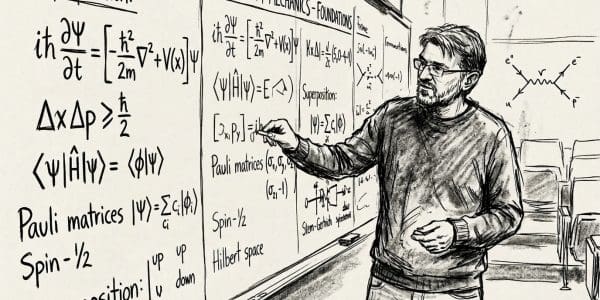
Vlatko Vedral is Professor of Quantum Information Science at the University of Oxford, a Serbian-born physicist who has spent three decades asking what entanglement is and what it can do. Entanglement is the link that lets two particles share one quantum state. As a PhD student in London he helped f
Image © Quantum Zeitgeist
Achieving complete quantum simulations once required resources beyond current capabilities; now, calculations previously intractable are possible using approximately ten thousand physical qubits. This new compilation framework estimates end-to-end runtimes, from 102 milliseconds on photonic or super
Image © Quantum Zeitgeist
SPOQC
A UK CubeSat mission to test quantum key distribution between a satellite and a ground station in Edinburgh.
Led by Heriot-Watt University
Themes: Communications, Networks
IQN
A national research hub building quantum networks, from local links to satellite connections. Heriot-Watt University leads it.
Led by Heriot-Watt University
Funding: £21.9m
Themes: Networks, Communications
Mission 2
A government goal that by 2035 the UK will have deployed the world's most advanced quantum network at scale.
Led by Department for Science, Innovation and Technology
Themes: Networks, Communications