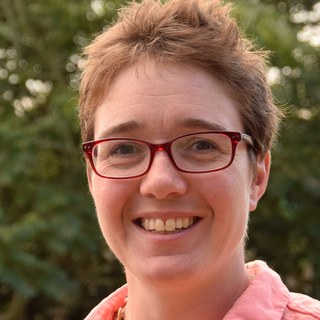
Charlotte Deane
Executive Chair, EPSRC; UKRI Senior Responsible Owner for Quantum
Engineering and Physical Sciences Research Council · UK Research and Innovation
Photo: Lhaypa, CC BY-SA 4.0, via Wikimedia CommonsA national research hub that develops quantum sensors for earlier diagnosis of disease. UCL and the University of Cambridge lead it.
Project data last updated 11 October 2026
Q-BIOMED is one of five quantum technology research hubs announced in July 2024. It was formally launched at The Shard in London in December 2024. UCL and the University of Cambridge lead it, with Oxford, Warwick, Heriot-Watt and Cardiff as academic partners. At its launch in December 2024 the co-directors were Professor Rachel McKendry (UCL) and Professor Mete Atatüre (Cambridge). The hub now lists Professor John Morton (UCL), Professor Mete Atatüre and Professor Molly Stevens as co-directors.
The hub works on quantum sensors that can detect cells, molecules and processes in the body. Its projects include quantum magnetic field sensors for Alzheimer's and heart disease, and fast, low-cost blood tests for infection and cancer using nanodiamond sensors. Industry, NHS, charity and patient groups also take part.
Executive Chair, EPSRC; UKRI Senior Responsible Owner for Quantum
Engineering and Physical Sciences Research Council · UK Research and Innovation
Photo: Lhaypa, CC BY-SA 4.0, via Wikimedia CommonsCo-Director and Principal Investigator, Q-BIOMED Hub; Founder and CTO, Quantum Motion
Q-BIOMED · Quantum Motion · University College London
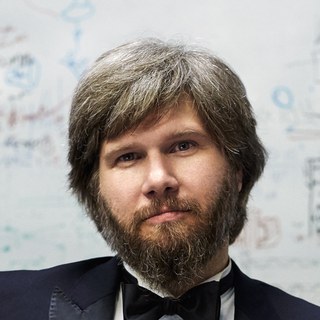
Co-Director, Q-BIOMED Hub
Q-BIOMED · University of Cambridge
Photo: Eceogguz, CC BY-SA 4.0, via Wikimedia Commons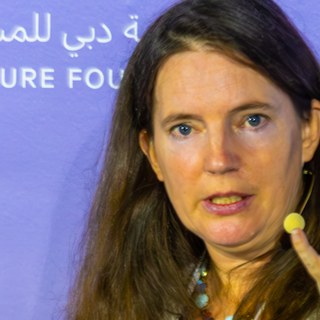
Co-Director, Q-BIOMED Hub
Q-BIOMED
Photo: Andrew Lih (User:Fuzheado), CC0, via Wikimedia Commons
University · London
Leads the Q-BIOMED quantum biomedical sensing hub and the UCL quantum institute; its researchers co-founded Phasecraft and Quantum Motion.

University · Cambridge

University · Oxford

University · Coventry

University · Edinburgh
University · Cardiff

Company · Cambridge

Company · Didcot

Start-up · Leeds

Research organisation · Teddington
Funder · Swindon

Funder · Swindon

Funder · London
Quantum Zeitgeist articles about Q-BIOMED, then ones naming its lead or partners.
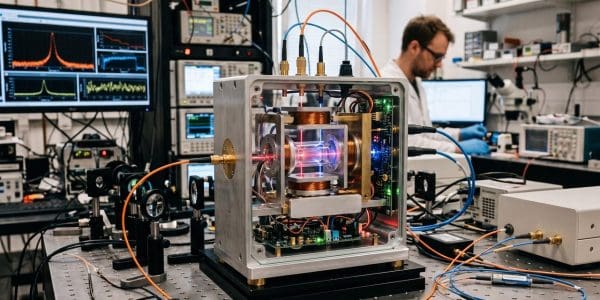
Q-BIOMED Connect 2026 united quantum researchers, clinicians & industry to discuss translating technologies into clinical impact.
Image © Quantum Zeitgeist
The UK is investing £106 million in five Quantum Technology Hubs to develop innovative systems for critical infrastructure, autonomous vehicles, and improved indoor and underwater navigation. The hubs will harness quantum properties to provide unparalleled power and capacity for analysis at a molecu
Image © Quantum Zeitgeist
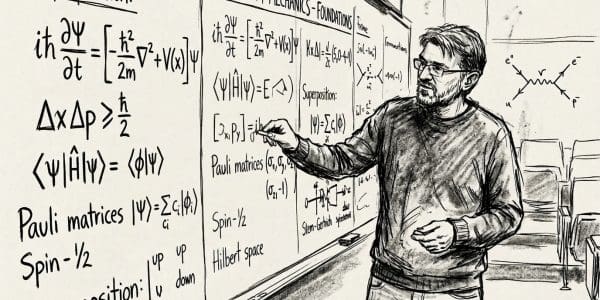
Vlatko Vedral is Professor of Quantum Information Science at the University of Oxford, a Serbian-born physicist who has spent three decades asking what entanglement is and what it can do. Entanglement is the link that lets two particles share one quantum state. As a PhD student in London he helped f
Image © Quantum Zeitgeist

From bits to qubits, converting classical information now accounts for circuit size, depth and resource needs previously overlooked in theoretical designs. This comprehensive survey moves beyond abstract concepts to examine techniques applicable to real-world datasets like sparse matrices and Boolea
Image © Quantum Zeitgeist
Mission 3
A government goal that by 2030 every NHS Trust will benefit from quantum sensing-enabled solutions.
Led by Department for Science, Innovation and Technology
Themes: Sensing, Imaging, Biomedical and health
QuSIT
A national research hub for quantum sensing, imaging and timing, led by the University of Birmingham.
Led by University of Birmingham
Funding: £22m
Themes: Sensing, Imaging, Timing and navigation
A University of Glasgow centre that brings together the university's quantum research and development.
Led by University of Glasgow
Themes: Imaging, Sensing, Computing


