

University of Strathclyde
University · Glasgow
Glasgow university behind the UK's quantum magnetometer network for space weather, lead of the Applied Quantum Technologies CDT, and partner in three hubs.
A centre of excellence launched by AWE in November 2025 and led by the University of Strathclyde, applying quantum sensing and computing to nuclear science for national security.
Project data last updated 11 October 2026
AWE launched the Quantum Centre for Nuclear Defence and Security (QCNDS) in November 2025 as a centre of excellence for quantum projects that support national security. The government announcement says it is led by the University of Strathclyde and includes the University of Birmingham, through the QuSIT hub, and the University of Oxford, through the QCi3 hub. Planned work includes quantum sensing to assess the condition of components and quantum computing for materials simulation.
AWE made Strathclyde a strategic alliance partner in August 2025, with quantum among the research areas. No funding figure for the centre was given in the sources.
University · Glasgow
Glasgow university behind the UK's quantum magnetometer network for space weather, lead of the Applied Quantum Technologies CDT, and partner in three hubs.

National lab · Aldermaston

University · Birmingham

University · Oxford
Government · London
Quantum Zeitgeist articles naming the lead organisation or partners. They may not be about this project.
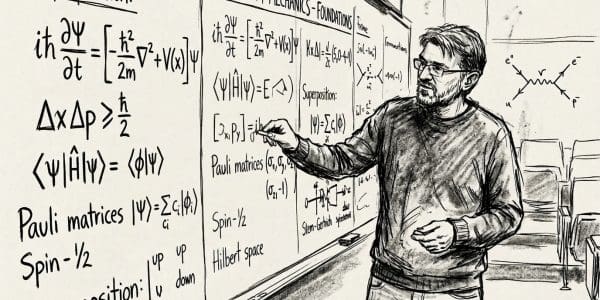
Vlatko Vedral is Professor of Quantum Information Science at the University of Oxford, a Serbian-born physicist who has spent three decades asking what entanglement is and what it can do. Entanglement is the link that lets two particles share one quantum state. As a PhD student in London he helped f
Image © Quantum Zeitgeist

From bits to qubits, converting classical information now accounts for circuit size, depth and resource needs previously overlooked in theoretical designs. This comprehensive survey moves beyond abstract concepts to examine techniques applicable to real-world datasets like sparse matrices and Boolea
Image © Quantum Zeitgeist
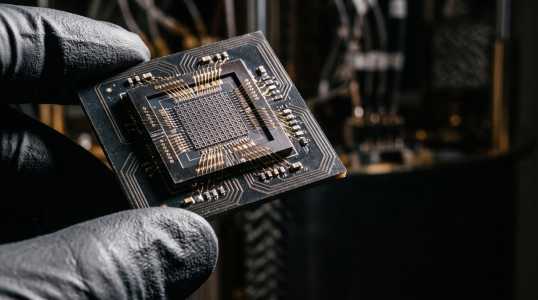
In the Q4Bio Challenge, research teams sought scalable quantum algorithms for healthcare, competing for $2 million in prize money, and five of the six finalists used IBM quantum hardware for their research. Q4Bio aims to accelerate development of quantum algorithms for healthcare that can run on qua
Image © Quantum Zeitgeist

A new study challenges AI’s knowledge creation, arguing a disconnect exists between its data-based predictions and human theory-based reasoning.
Image © Quantum Zeitgeist
EPSRC fellowships for 11 early-career quantum technology researchers at UK universities.
Led by Engineering and Physical Sciences Research Council
Themes: Skills and training, Computing, Sensing
QEPNT
A national research hub for quantum position, navigation and timing, led by the University of Glasgow. It aims to reduce reliance on satellite signals such as GPS.
Led by University of Glasgow
Funding: £21.9m
Themes: Timing and navigation, Sensing, Defence and security
Mission 5
A government goal that by 2030 mobile, networked quantum sensors will give new situational awareness across critical infrastructure.
Led by Department for Science, Innovation and Technology
Themes: Sensing, Defence and security