
The Quantum Data Centre of the Future
An ORCA-led consortium that designed and demonstrated how a quantum computer could sit inside a data centre alongside classical systems.
Project data last updated 11 October 2026
About this project
The project ran from March 2022 to March 2025. ORCA Computing led a group of companies and universities, with BT and KETS leading the architecture and communications work.
The partners showed a hybrid quantum and classical data centre design at BT's Adastral Park in early 2024. The work covered photonic quantum computing, quantum-secure networking and post-quantum cryptography.
Who leads it
Lead organisation

ORCA Computing
Company · London
London maker of room-temperature photonic quantum computers, with a testbed at the NQCC and a 2026 enterprise deployment in Japan with Toyota Tsusho.
Partners (12)

BP
Company · London

BT Group
Company · London

Digital Catapult
Research organisation · London

Imperial College London
University · London

KETS Quantum Security
Company · Bristol

NCC Group
Company · Manchester

PQShield
Company · Oxford

Riverlane
Company · Cambridge

University College London
University · London

University of Bath
University · Bath

University of Bristol
University · Bristol

University of Southampton
University · Southampton
Funders

Innovate UK
Funder · Swindon

UK Research and Innovation
Funder · Swindon
In the news
Quantum Zeitgeist articles naming the lead organisation or partners. They may not be about this project.

Can Riverlane’s Deltaflow unlock useful quantum computing?, read on Quantum Zeitgeist
Is Riverlane’s Deltaflow the key to useful quantum computing?
Image © Quantum Zeitgeist
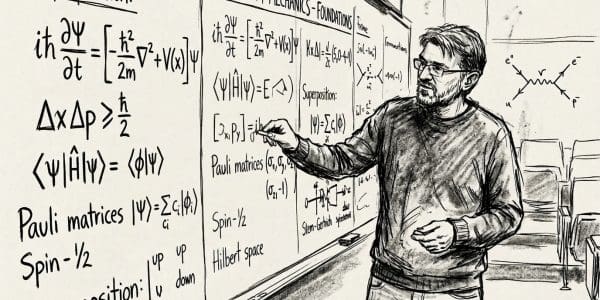
Vlatko Vedral, The Oxford Physicist Who Put a Number on Entanglement, read on Quantum Zeitgeist
Vlatko Vedral is Professor of Quantum Information Science at the University of Oxford, a Serbian-born physicist who has spent three decades asking what entanglement is and what it can do. Entanglement is the link that lets two particles share one quantum state. As a PhD student in London he helped f
Image © Quantum Zeitgeist

Infleqtion and Riverlane team up on error correction for UK quantum computers, read on Quantum Zeitgeist
Infleqtion and Riverlane are collaborating to advance quantum error correction in the UK, integrating Riverlane’s real-time tech with Infleqtion’s neutral atom platform.
Image © Quantum Zeitgeist
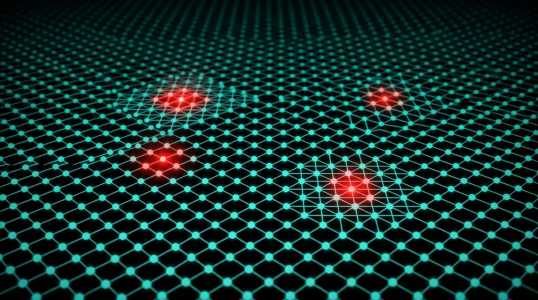
Researchers Simulate Molecules Using Ten Thousand Qubits, read on Quantum Zeitgeist
Achieving complete quantum simulations once required resources beyond current capabilities; now, calculations previously intractable are possible using approximately ten thousand physical qubits. This new compilation framework estimates end-to-end runtimes, from 102 milliseconds on photonic or super
Image © Quantum Zeitgeist
Sources
Related projects
- Active Programme · 2014 onwards
UK National Quantum Technologies Programme
NQTP
The UK's national programme for quantum technologies, set up in 2014 as a partnership between government, academia and industry.
Led by UK Research and Innovation
Themes: Computing, Sensing, Imaging, Timing and navigation, Communications, Networks, Skills and training
- Active Collaboration · 2026 onwards
Satellite Platform for Optical Quantum Communications
SPOQC
A UK CubeSat mission to test quantum key distribution between a satellite and a ground station in Edinburgh.
Led by Heriot-Watt University
Themes: Communications, Networks
- Active Hub · 2024 to 2029
Hub for Quantum Computing via Integrated and Interconnected Implementations
QCi3
The national research hub for quantum computing, led by the University of Oxford. It works on scalable and networked quantum computers.
Led by University of Oxford
Funding: £21.9m
Themes: Computing, Networks, Software and algorithms