
Developing an error corrected quantum processor solution for commercial quantum computing
A Universal Quantum-led consortium building a trapped-ion quantum computer that can correct its own errors, with Rolls-Royce as end user.
Project data last updated 11 October 2026
About this project
The consortium was announced in November 2021 and the work ran from February 2022 to March 2025. Rolls-Royce, supported by the STFC Hartree Centre, explored applications in jet engine design, starting with fluid dynamics.
Riverlane provided the error correction software. Edwards, TMD Technologies and Diamond Microwave were supply-chain partners. Sia Partners and Qureca worked on commercialisation and outreach.
Who leads it
Winfried Hensinger
Co-Founder, Chief Scientist and Chairman, Universal Quantum
Universal Quantum · University of Sussex
Lead organisation

Universal Quantum
Company · Brighton
Sussex spin-out building modular trapped-ion quantum computer chips that run at 70K; raised over $100m in an October 2026 Series A.
Partners (10)
Diamond Microwave
Company · Leeds

Edwards Vacuum
Company · Burgess Hill

Imperial College London
University · London

Qureca
Company · Glasgow

Riverlane
Company · Cambridge

Rolls-Royce
Company · London

Sia Partners UK
Company · London

Science and Technology Facilities Council
National lab · Swindon

TMD Technologies
Company · Hayes

University of Sussex
University · Brighton
Funders

Innovate UK
Funder · Swindon

UK Research and Innovation
Funder · Swindon
In the news
Quantum Zeitgeist articles naming the lead organisation or partners. They may not be about this project.

Can Riverlane’s Deltaflow unlock useful quantum computing?, read on Quantum Zeitgeist
Is Riverlane’s Deltaflow the key to useful quantum computing?
Image © Quantum Zeitgeist
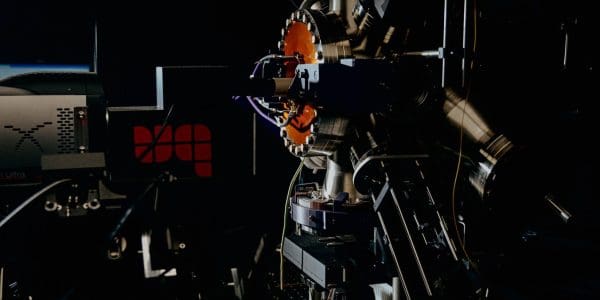
Universal Quantum secures over $100M to expand quantum computing, read on Quantum Zeitgeist
Universal Quantum, a UK-based firm, just raised over $100 million in Series A funding, the largest of its kind for a British quantum company.
Image © Quantum Zeitgeist

University of Edinburgh’s Quantum Fringe festival builds on 1,000 attendees, read on Quantum Zeitgeist
Quantum Fringe Festival 2026, a two-month programme of events, explores the latest developments in quantum computing and its real-world applications. Building on last year’s event, which brought together around 1,000 attendees across 16 events, the festival running from May to July 2026, continues t
Image © Quantum Zeitgeist
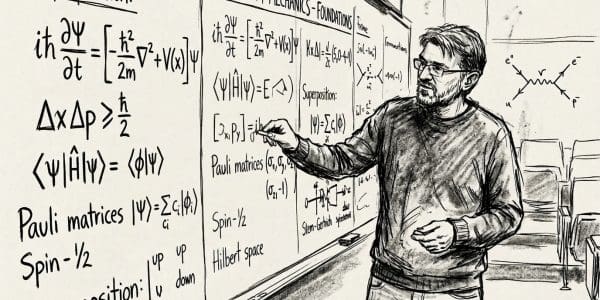
Vlatko Vedral, The Oxford Physicist Who Put a Number on Entanglement, read on Quantum Zeitgeist
Vlatko Vedral is Professor of Quantum Information Science at the University of Oxford, a Serbian-born physicist who has spent three decades asking what entanglement is and what it can do. Entanglement is the link that lets two particles share one quantum state. As a PhD student in London he helped f
Image © Quantum Zeitgeist
Sources
- Gateway to Research: Developing an error corrected quantum processor solution for commercial quantum computing (gtr.ukri.org)
- University of Sussex: University of Sussex spin-out led consortium awarded millions to build commercial quantum computer (sussex.ac.uk)
- Quantum Zeitgeist: Quantum Error Correction Gets £7.5M UK Boost (quantumzeitgeist.com)
Related projects
- Active Programme · 2026 onwards
ProQure: Scaling UK Quantum Computing
ProQure
A government procurement programme to fund prototype quantum computers now and buy large-scale machines for national infrastructure in the 2030s.
Led by Innovate UK
Themes: Computing
- Active Programme · 2026 onwards
Quantum Advantage TurboCHarger
QATCH
A four-year programme on quantum software, algorithms and verification, led by the University of Edinburgh's Quantum Software Lab with the NQCC.
Led by Quantum Software Lab
Funding: £20m
Themes: Computing, Software and algorithms
- Active Programme · 2025 onwards
EPSRC Quantum Technology Career Acceleration Fellowships
EPSRC fellowships for 11 early-career quantum technology researchers at UK universities.
Led by Engineering and Physical Sciences Research Council
Themes: Skills and training, Computing, Sensing